

The last leg of our European trip was Austria. We had planned to visit Switzerland, but the cost was prohibitive, so I looked at alternate options. I considered Amsterdam since getting home from there would’ve been easy, but ultimately there wasn’t much I was interested in seeing, so I kept looking elsewhere. Austria had never been on my “must visit” list, and to be honest, I’d never even looked into it. Since our trip was ending in Verona, Austria turned out to be an easy patch to extend the journey. One quick 3-hour train ride later, and we were in Innsbruck.
Austria is a beautiful country with several good niche products, but generally speaking, the food is pretty mid. It’s basically German food, which makes total sense given its proximity to Germany.
Innsbruck
From Verona to Innsbruck, it’s a beautiful 3-hour train ride through the mountains. Innsbruck is nicknamed the “capital of the Alps” for good reason — it sits right in the middle of the Alps, and it’s stunning. From the view out our hotel room window to the summit of Nordkette, it’s simply breathtaking. That alone was well worth the trip.
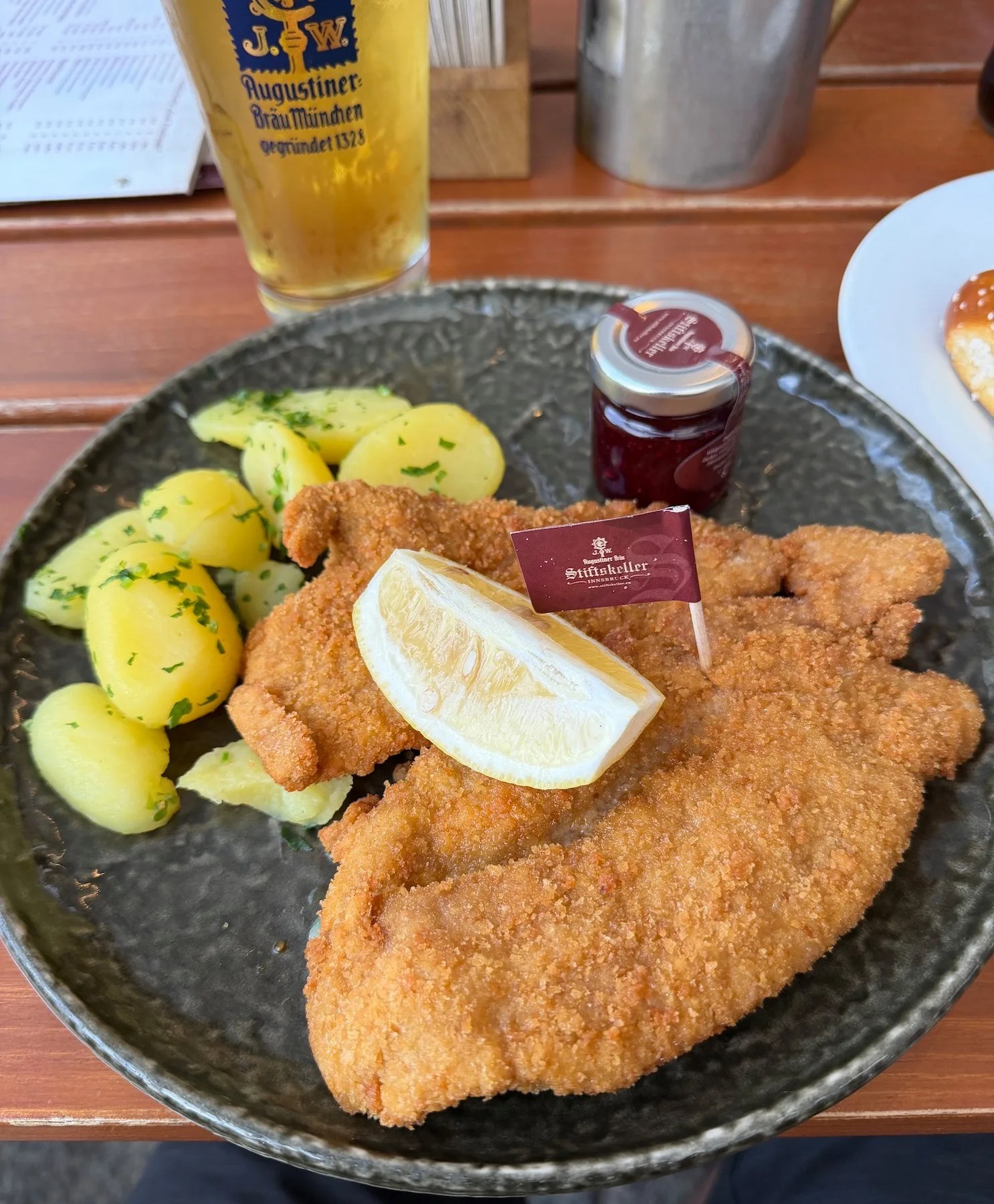
As mentioned, the food here is classic German fare: schnitzel, goulash, sausage, and the like. On our first night, here’s the exchange I had with our waiter:
Me: Can I get some vegetables with my schnitzel?
Waiter: Yes.
Me: Great, what can I have?
Waiter: Boiled potatoes or French fries.
Me: Ughhh.
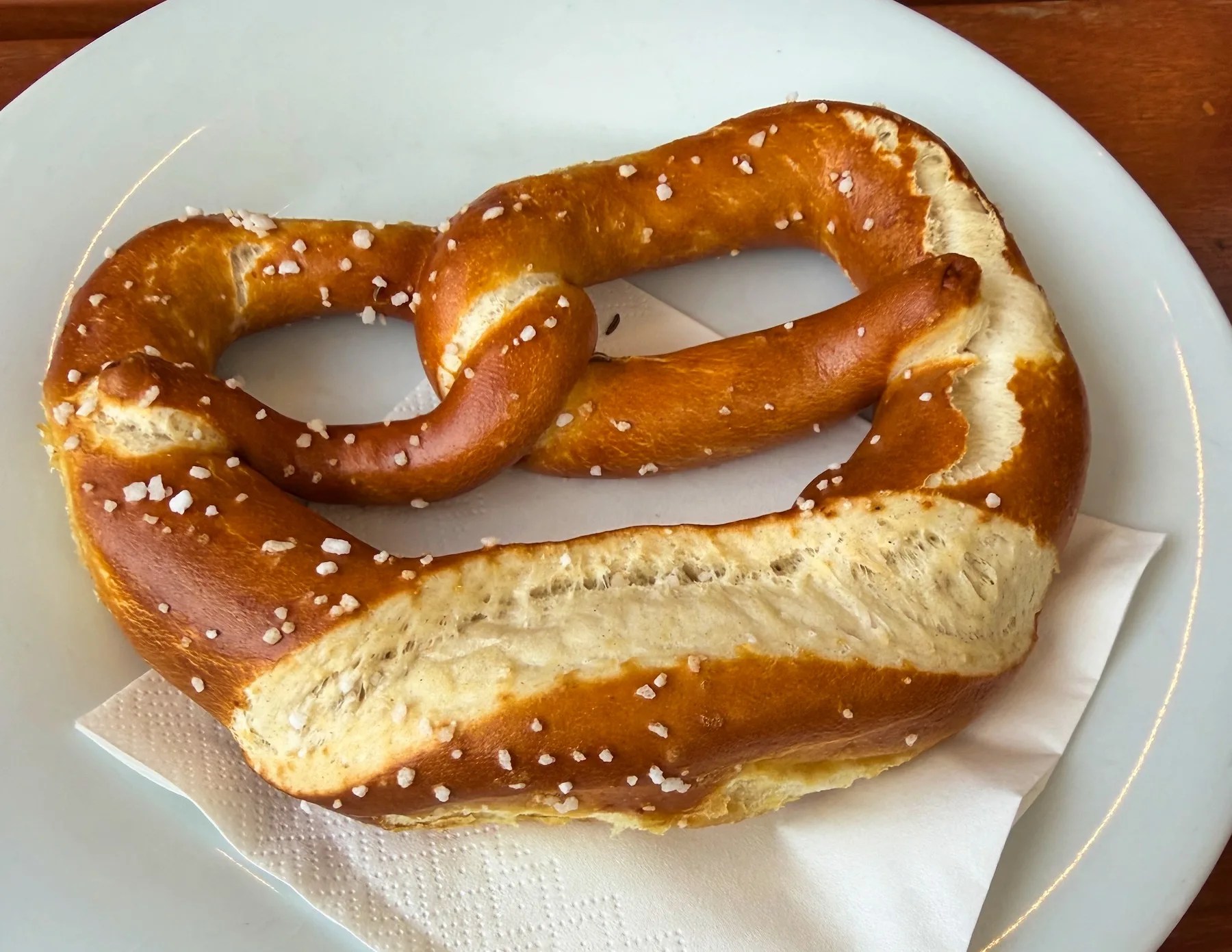
I ended up with the veal schnitzel, served with Preiselbeermarmelade (cranberry jam) and a wedge of lemon. Since the schnitzel is fried, pairing it with jam felt a bit odd to me — I much prefer squeezing lemon over it to cut through the richness. Most locals ate it with the jam, though, so I guess it’s an acquired taste. We obviously had to order pretzels, which were quite good, though unfortunately we never got one fresh out of the oven — they were all served cold.
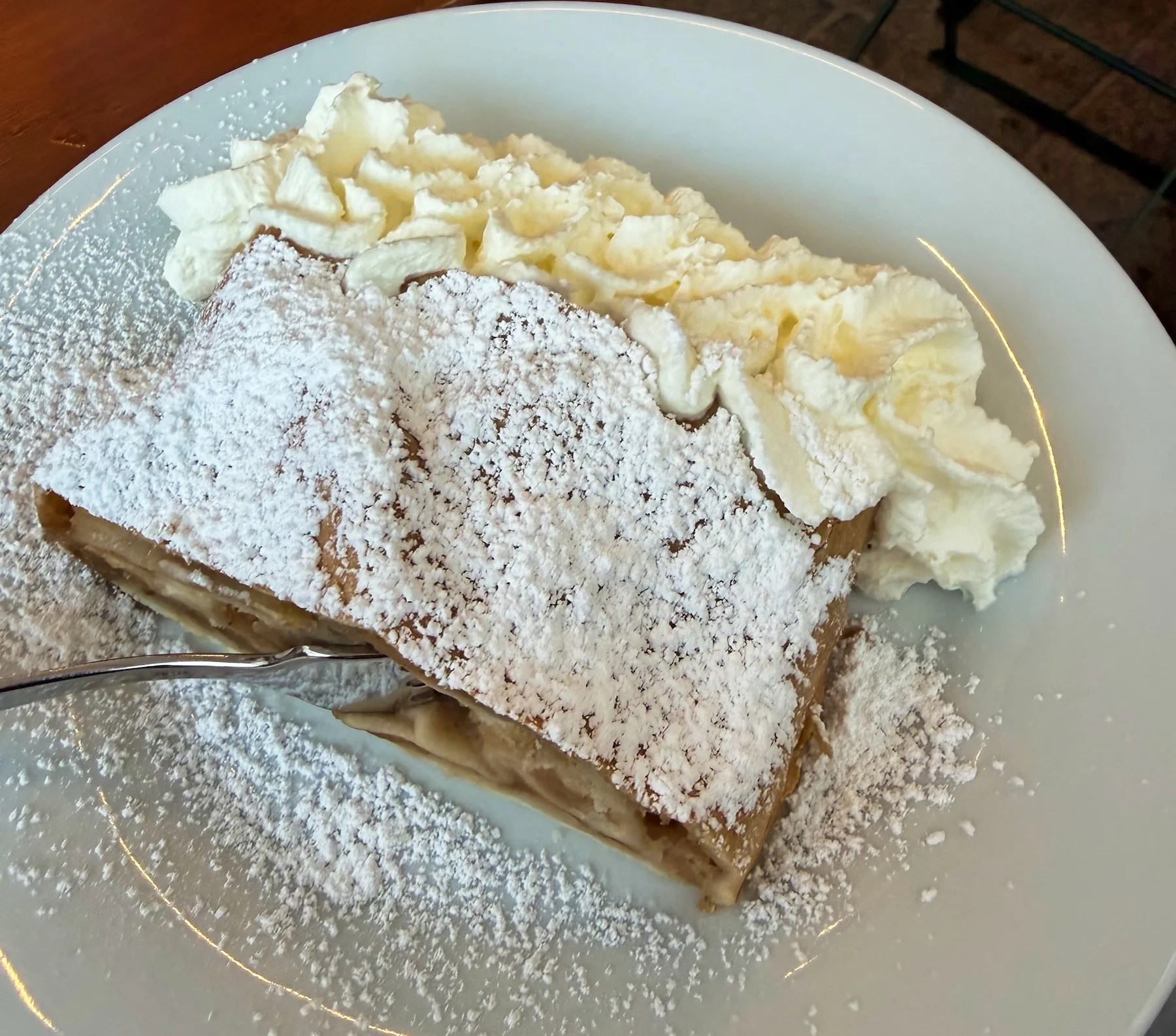
To round out the meal, we went with an Austrian classic: Apfelstrudel. To my surprise, it was really good — paper-thin layers of dough wrapped around apples, raisins, and warm spices. They offered a few different accompaniments, but we kept it classic and traditional with whipped cream.
Before leaving Innsbruck, we stopped by the Tyrolean Beekeeper Association to pick up some honey and other derivatives. The honey (Waldhonig) isn’t made from nectar at all — the bees collect honeydew produced by insects living on spruce, fir, and other trees. Compared to North American honey, it’s a completely different product: caramelized and malty is probably the best way to describe it. Everyone enjoyed it, but it’s definitely its own thing.
Lastly, I visited an artisanal schnapps shop where I got to sample several flavors. I’m not a big drinker, but it felt like the perfect souvenir to bring home. I picked up the ultra-traditional Zirbenschnaps, made from pinecones. I finally tried it back home, and it’s quite powerful, sitting at 38% alcohol — a great digestif for a change of pace from my usual limoncello.
Salzburg


When I traveled to Germany in 2010, I visited a few Biergartens and definitely wanted to check one out in Austria too. The most famous one is in Salzburg: Augustiner Bräustübl.
It’s been open since 1621 and is still packed every single night for good reason. First, the garden is beautiful; the food is decent, and the beer is delicious. To get your beer, you pay a cashier who hands you a coupon. You then grab a clean mug off the wall and line up to have it filled. Before you reach the keg, there’s a large faucet with ice-cold water to rinse and cool your mug down. Once that’s done, someone fills it straight from a wooden keg, and you’re all set.
If you want food, you head inside to the first floor, where a row of small stalls sell fish, chicken, ribs, pretzels, hot chips, and more. Our hands were full, so we decided to grab a seat inside and eat there. It had a cafeteria vibe, except everyone was drinking beer out of 1-liter mugs.
Salzburg, of course, is known as Mozart’s birthplace. I’m not a classical music fan, nor a Mozart connoisseur beyond knowing he was a piano virtuoso, but the whole city is plastered with Mozart-themed everything. This even led to the creation of the Mozartkugel in the late 1800s as a tribute to him — a ball of chocolate with nougat, pistachio, and marzipan inside. I didn’t try one since I’m allergic to pistachios, but the kids did and liked them, though they didn’t go overboard. My verdict: they’re fine, but don’t overspend on them.
Vienna
Vienna, food-wise, felt very similar to the rest of Austria. They do have Erdäpfelsalat, a potato salad in a mayonnaise-like vinaigrette. I’m not sure if the place I tried it at made it differently, but it tasted way too vinegary for my liking, so I wouldn’t order it again.
Sachertorte is probably the most classic dessert you can get there, but it didn’t quite fit our schedule. We were also in the middle of a heat wave, so digging into a rich chocolate cake wasn’t exactly appealing — we prioritized gelato instead. Sachertorte, for reference, is a chocolate cake layered with apricot jam and covered in dark chocolate. I’m not much of a cake person, so I wasn’t too bummed to skip it.
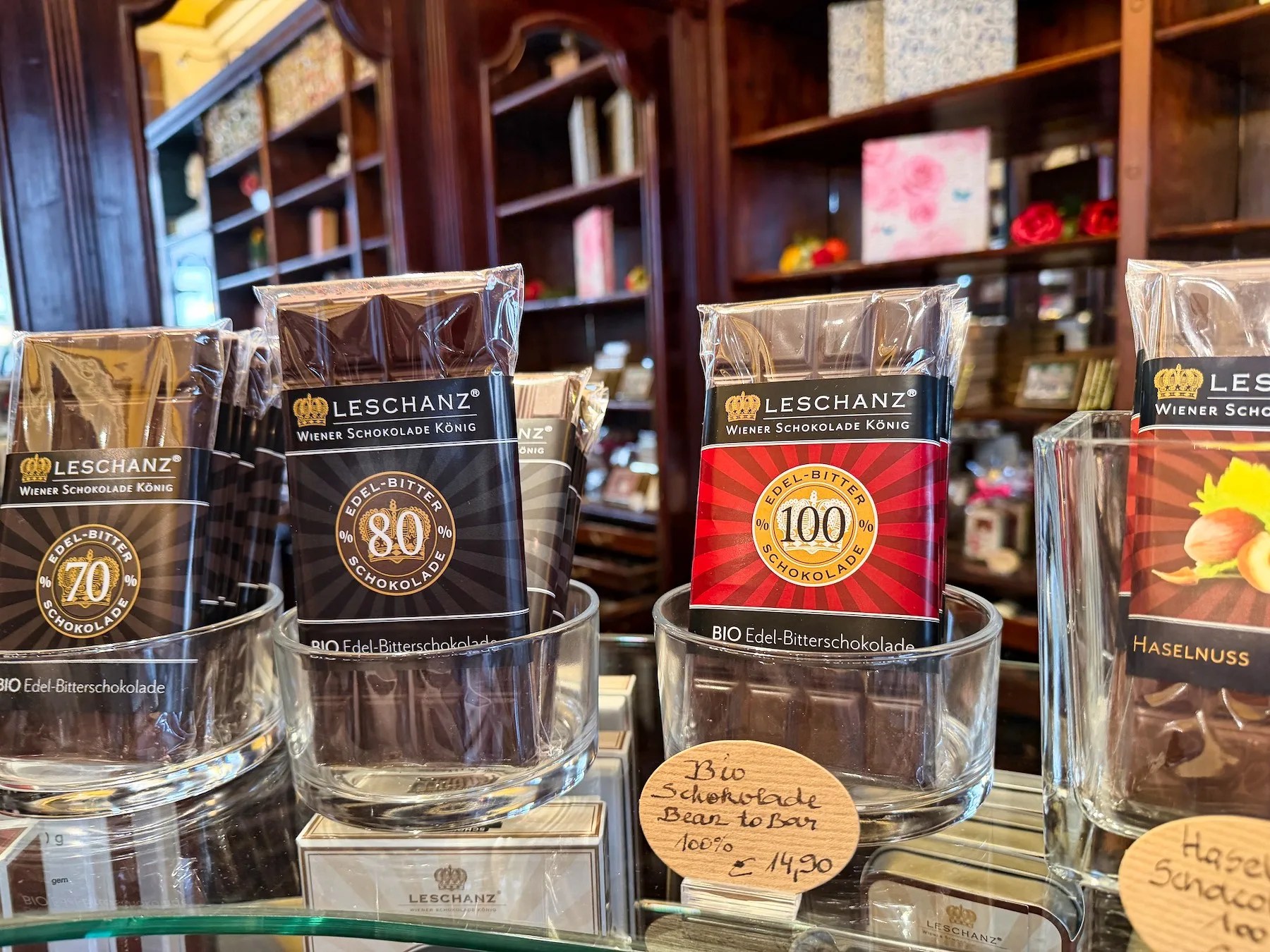
Vienna also has a huge chocolate scene, with brands like Zotter, Xocolat, Demel, Leschanz, and — of course — Lindt, which is just everywhere. We visited most of them, and Leschanz and Xocolat were really the standouts. Those shops lean handmade rather than industrial, and it shows in the taste. I always go for 80-85% dark chocolate, and those two stood above all the rest — rich flavor, silky texture, and not chalky at all.
By this point, we were pretty tired of the Austrian classics and reverted to Italian food for dinner 😉 Honestly, while Austria didn’t have a standout food scene, it was still one of the highlights of the trip for its natural beauty alone. Definitely worth a visit.